When Scissor Lift Hire Makes Sense
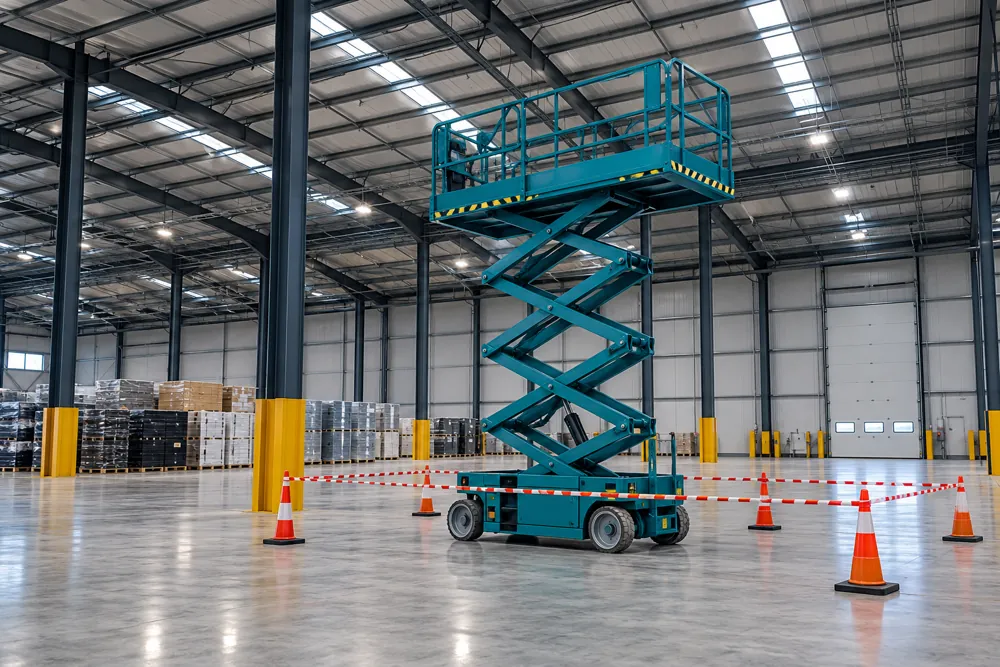
A scissor lift raises its platform vertically above the chassis. It is a useful option when the working position sits directly above an accessible floor area, such as a lighting run, cable tray or suspended ceiling. It does not provide the same reach around obstacles as an articulated boom.
Electric machines are often considered for indoor work where exhaust emissions would be unsuitable. The final choice still depends on the site environment, floor capacity and machine specification. A finished office floor and an industrial slab need different checks, even if the required working height is similar.
Outdoor work calls for a model approved for the actual conditions. An indoor-rated platform is not made suitable for external use simply because the weather looks calm. Tell us whether work will take place inside, outside or across a mixture of both locations.
Plan The Route And The Working Position
Measure the narrowest doorway along the entire travel route, including corners after the entrance. A machine may fit through the loading door but be unable to turn into the work area. Record door height, threshold details and any requirement to lower guardrails using the manufacturer’s approved procedure.
Floor loading needs more thought than dividing the machine weight by its footprint. Wheel loads, ramps and suspended slabs can introduce local restrictions. Ask the building’s responsible person for loading information and provide the proposed machine details for assessment.
Charging arrangements belong in the hire plan. Check where the platform can be parked securely, what charging supply the model needs and whether the supply remains available outside normal working hours. Agree who will connect the charger and how trailing cables will be managed in an occupied building.
Safety And Your Responsibilities
LOLER 1998 and the Provision and Use of Work Equipment Regulations 1998 are relevant to equipment selection, safe use and examination. Confirm the applicable records and responsibilities before accepting the equipment. A hire contract does not remove the duties of the business controlling its use. The Work at Height Regulations 2005 also apply to planning the access task. Ask who is responsible for the risk assessment and supervision.
How To Plan Your Hire
Define The Task
Describe the work, the location and the intended programme. Include floor loading, access width, platform capacity and charging arrangements. If a measurement is an estimate, say so clearly rather than presenting it as a confirmed site dimension.
Check The Proposal
Review the suggested machine and its supporting specification with the person planning the work. Ask about anything the quote assumes, including access hours, unloading space and which party will provide the operator.
Prepare For Delivery
Nominate a site contact who knows the delivery route and can receive the equipment. Arrange the agreed working area and brief other trades about the planned activity. Tell the supplier about changes before dispatch.
Agree The End Of Hire
Keep the equipment available for the agreed collection and follow the supplier’s off-hire process. Record any changes to the programme promptly. Clarify whether a collection request ends the hire charge or whether another contractual condition applies.
What Affects The Hire Cost
The cost is shaped by equipment specification, the duration and transport arrangements. An operator, specialist attachment or restricted delivery window may change the scope. We do not publish a starting price that assumes every London site has the same access and working conditions.
Ask for the proposal in writing and compare what is included, rather than only the headline hire figure. Make the intended start, working days and collection arrangements clear. If the job may run longer than planned, ask how additional time will be authorised and charged before the hire begins.
Scissor Lift Hire Questions
What Should I Check Before Booking Scissor Lift Hire?
Scissor Lift Hire should be based on the actual site and task. Check floor loading, access width, platform capacity and charging arrangements. Share those details with your enquiry, along with photographs and preferred dates. Ask for the proposed machine specification before accepting a quote so your responsible person can assess it against the planned work.
What Should The Hire Quote Include?
A scissor lift hire quote should identify the proposed equipment, the hire period and the delivery and collection arrangements. Ask whether an operator is included, what fuel or charging terms apply and how an extension is agreed. Read any damage, cancellation and off-hire conditions before booking so the scope is clear to everyone involved.
Can I Change The Hire Dates?
Scissor Lift Hire dates can only be changed by agreement with the supplier. Tell us if your programme is provisional and identify any fixed delivery restrictions at the outset. Ask how changes affect availability, transport and the hire charge. Do not assume a revised construction programme automatically changes an existing equipment booking or its collection date.
Related Access Options
Compare cherry picker hire, telehandler hire, boom lift hire, spider lift hire, mewp hire. Check our London coverage guide or send your site details to discuss the next step.